
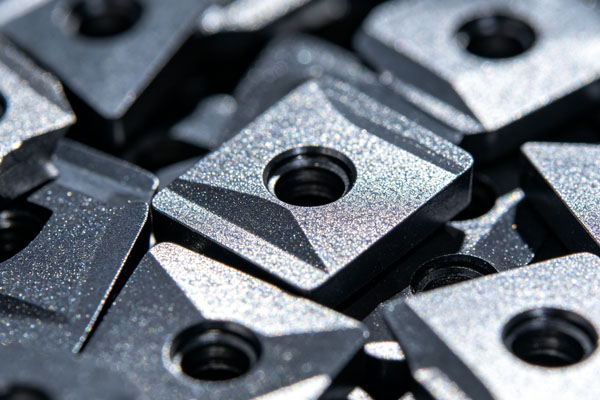
In the field of metal machining, turning is one of the most widely used processes. The performance of turning inserts directly affects machining efficiency, surface finish, and tool life. Different materials have varying mechanical properties, so selecting the right insert is crucial. In this article, we will explore the best cutting tools for machining steel, stainless steel, aluminum alloys, copper, and cast iron.
1. Basic Types of Turning Inserts
Turning inserts can be categorized by material and coating:
1. High-Speed Steel (HSS) Inserts
- Pros: Good toughness, impact resistance, suitable for low to medium cutting speeds
- Cons: Lower wear resistance, not ideal for hard materials
2. Carbide Inserts
- Pros: High wear resistance, suitable for high-speed machining of steel and alloys
- Cons: Lower toughness, can chip under heavy impact
3. Ceramic Inserts
- Pros: High hardness, high heat resistance, ideal for hard steel at high speeds
- Cons: Brittle and prone to breakage
4. Cubic Boron Nitride (CBN) Inserts
- Pros: Perfect for hard materials like quenched steel
- Cons: Expensive
5. Polycrystalline Diamond (PCD) Inserts
- Pros: Best for non-ferrous metals like aluminum, copper, and composites
- Cons: Not suitable for iron-based materials
2. Material-Specific Machining Strategies
1. Carbon Steel and Alloy Steel
1. Characteristics: High strength, good toughness
2. Recommended Inserts: Carbide inserts with TiCN or Al2O3 coating
3. Machining Tips:
- Medium to high cutting speed
- Use larger nose radius to prevent chipping
- Coatings reduce friction and extend tool life
Pro Tip: For hardened steel, CBN inserts provide higher machining efficiency at high hardness.
2. Stainless Steel
1. Characteristics: Work-hardening, easy to stick to the tool
2. Recommended Inserts: Coated carbide inserts
3. Machining Tips:
- Lower cutting speed for stability
- Small positive rake angle to reduce cutting forces
- Use cutting fluid to prevent built-up edge
Pro Tip: For austenitic stainless steel, TiAlN-coated inserts are highly effective against sticking.
3. Aluminum Alloys and Copper
1. Characteristics: Soft, easy to cut, but prone to sticking
2. Recommended Inserts: PCD inserts or high-gloss coated carbide inserts
3. Machining Tips:
- High cutting speed and feed
- Sharp nose radius for smooth cutting
- Avoid standard ceramic or uncoated carbide, which can stick to soft metals
Pro Tip: For aluminum alloys, sharpness is more important than wear resistance to achieve high surface finish.
4. Cast Iron
1. Characteristics: Brittle, medium hardness
2. Recommended Inserts: Carbide or ceramic inserts
3. Machining Tips:
- High-speed turning is acceptable
- Larger rake angles reduce cutting forces
- Avoid too small feed, which concentrates stress on the insert tip
3. Insert Selection Summary Table
| Material | Recommended Insert Type | Cutting Features | Key Considerations |
|---|---|---|---|
| Carbon/Alloy Steel | Carbide inserts with coating | Medium-high speed cutting | Coating reduces wear |
| Stainless Steel | Coated carbide inserts | Work-hardening, low-speed cutting | Use cutting fluid, anti-sticking |
| Aluminum/Copper | PCD or coated carbide inserts | High-speed, sharp nose radius | Avoid built-up edge, high finish |
| Cast Iron | Carbide/Ceramic inserts | High-speed cutting, brittle | Proper angles to reduce stress |
4. Conclusion
Choosing the right turning inserts improves machining efficiency, extends tool life, and enhances surface quality. Material properties determine insert requirements: steel demands wear resistance and toughness, stainless steel needs anti-sticking performance, aluminum and copper benefit from sharp edges for high finish, and cast iron suits high-speed carbide or ceramic inserts. Understanding both material properties and cutting tool capabilities is essential for every machinist.


