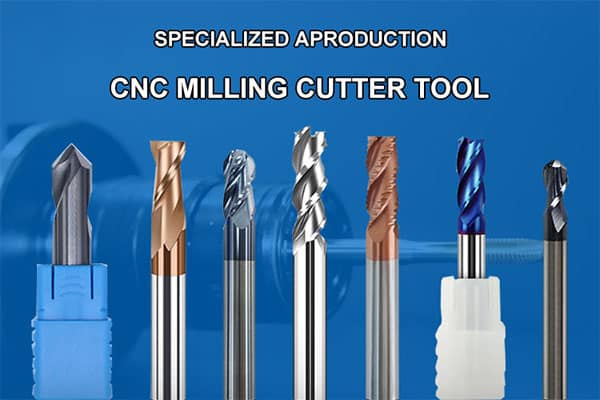
Milling Tools is a crucial machining process in the manufacturing industry, involving the removal of material using rotary cutters. The choice of milling tools directly impacts the quality, efficiency, and cost of the milling process. In this blog, we will explore the various types of milling tools, their applications, and their specific characteristics.
1. End Mills
Overview:
End mills are one of the most common types of milling tools. They have cutting teeth at one end, as well as on the sides.
Types:
- Square End Mills: Have a square end for sharp corners.
- Ball Nose End Mills: Have a rounded end for 3D contouring.
- Corner Radius End Mills: Have a radius at the corner for increased strength and wear resistance.
- Roughing End Mills: Designed for removing large amounts of material quickly.
Applications:
- General milling operations.
- Producing flat surfaces, slots, and profiles.
2. Face Mills
Overview:
Face mills are used for cutting large flat surfaces. They have multiple cutting edges and are typically mounted on the spindle.
Types:
- Standard Face Mills: Have replaceable inserts.
- Shell Mills: Similar to face mills but mounted with a central hole.
Applications:
- Surface finishing.
- High-speed cutting and heavy material removal.
3. Slab Mills
Overview:
Slab mills are used for machining wide surfaces, typically on horizontal milling machines.
Types:
- Plain Slab Mills: Simple and used for general-purpose milling.
- Helical Slab Mills: Have helical flutes for better cutting action.
Applications:
- Milling large flat surfaces.
- Heavy-duty milling operations.
4. Thread Mills
Overview:
Thread mills are specialized tools used for creating threads in a workpiece. Unlike taps, they can produce threads in materials where tapping is challenging.
Types:
- Single-Profile Thread Mills: Used for specific thread profiles.
- Multi-Profile Thread Mills: Capable of producing various thread sizes.
Applications:
- Threading in difficult-to-machine materials.
- Creating internal and external threads.
5. T-Slot Cutters
Overview:
T-slot cutters are used to create T-shaped slots in workpieces.
Types:
Standard T-Slot Cutters: Available in various sizes and angles.
Applications:
- Machining T-slots on machine tables and fixtures.
- Creating slots for bolt heads.
6. Dovetail Cutters
Overview:
Dovetail cutters are used to produce dovetail slots, which are used in machine tool parts and jigs.
Types:
- Standard Dovetail Cutters: Different sizes and angles available.
Applications:
- Creating dovetail slots for assembly and fitting purposes.
7. Fly Cutters
Overview:
Fly cutters are single-point cutting tools mounted on a rotating head. They are versatile and can be used for various cutting operations.
Types:
- Single Fly Cutters: Have one cutting edge.
- Multi-Point Fly Cutters: Have multiple cutting edges for increased efficiency.
Applications:
- Surface finishing.
- Machining large flat surfaces with a smooth finish.
8. Woodruff Cutters
Overview:
Woodruff cutters, also known as keyseat cutters, are used to cut keyways for Woodruff keys.
Types:
- Standard Woodruff Cutters: Available in various diameters and widths.
Applications:
- Machining keyways in shafts.
Summary
Choosing the right milling tool is essential for achieving the desired machining results. Each type of milling tool has its unique features and applications, making it suitable for specific tasks. Understanding the classification of milling tools helps in selecting the right tool for the job, ensuring efficiency, precision, and cost-effectiveness in the milling process.
By familiarizing yourself with the different types of milling tools and their uses, you can optimize your machining operations and achieve better outcomes.