
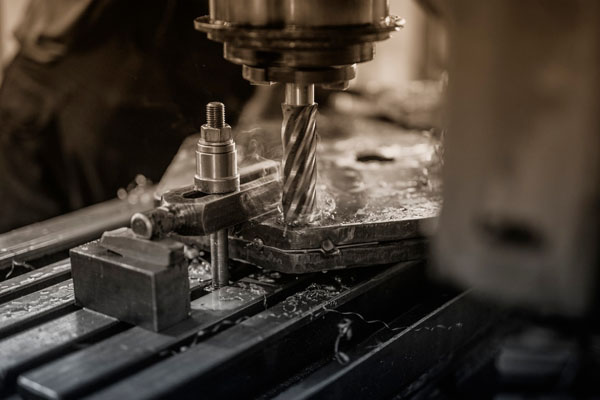
Milling, as one of the cornerstone processes of modern manufacturing, relies heavily on its core executor – the milling cutter. Selecting the right milling cutter is no simple task; it requires a deep understanding of the tool’s inherent technical characteristics. This article delves into the core technical elements influencing milling cutter performance, providing a solid theoretical foundation for your machining decisions.
1. The Foundation of Core Performance: Material & Substrate
1. High-Speed Steel (HSS): The classic choice for toughness (e.g., M2, M35, M42). High toughness allows it to withstand impact and interrupted cuts, but high-temperature hardness and wear resistance are limited. Typically used for low-speed, small-batch, or complex-shaped tools (e.g., form cutters). Powder metallurgy HSS offers superior performance.
2. Cemented Carbide (Tungsten Carbide): The undisputed workhorse of modern milling. Sintered from tungsten carbide (WC) micro-powders with cobalt or other metallic binders. Its exceptional hardness, wear resistance, and red hardness (ability to retain hardness at elevated temperatures) make it suitable for high-speed, high-efficiency machining. Carbide grades offer different balances between toughness and wear resistance based on cobalt content and WC grain size.
3. Cermets: TiC or TiCN base with Nickel/Cobalt binders. High hardness, good wear resistance, excellent chemical stability (resists built-up edge), excels in finishing steels and cast iron. However, toughness is lower than carbide, and it is sensitive to impact.
4. Ceramics: Primarily Alumina-based or Silicon Nitride-based. Extremely high hardness and red hardness, outstanding heat resistance (>1200°C), capable of machining hardened steels, superalloys, and other difficult-to-machine materials at very high cutting speeds. Brittle, poor impact resistance, requires high machine rigidity.
5. Cubic Boron Nitride (CBN): Hardness second only to diamond. Primarily used for machining ferrous materials with hardness >50 HRC (hardened steels, chilled cast iron, etc.). Excellent wear resistance and long tool life. Also requires high machine rigidity.
6. Polycrystalline Diamond (PCD): Primarily used for high-speed, precision machining of non-ferrous metals (aluminum, copper, composites, graphite, etc.). Offers exceptional wear resistance and a sharp cutting edge but deteriorates rapidly in contact with iron.
2. The Art of Geometric Design
Milling cutter geometry directly influences cutting forces, chip formation, chip evacuation, surface finish, and tool life:
1. Rake Angle:
- Positive Rake: Sharp cutting edge, lower cutting forces, reduced power consumption, better surface finish. Ideal for ductile materials (aluminum, low-carbon steel) and finishing. Lower edge strength.
- Negative Rake: Higher edge strength, better impact resistance, improved heat dissipation. Suitable for hard/brittle materials (cast iron, hardened steel) and interrupted cuts. Higher cutting forces and power consumption.
- Double Positive / Double Negative / Positive-Negative Combination: Balances edge strength and cutting sharpness.
2. Clearance Angle (Relief Angle): Reduces friction between the tool flank and workpiece. Too small increases friction and heat; too large weakens edge strength and heat dissipation. Selection depends on workpiece material and operation type (roughing/finishing).
3. Helix Angle:
- High Helix Angle (35°-60°): Smoother cutting action, higher axial force, lower radial force, excellent chip evacuation. Suitable for finishing, thin walls, long overhangs, and gummy materials (aluminum, stainless steel). Provides better surface finish.
- Low Helix Angle (10°-35°): Higher edge strength, lower axial force, higher radial force, relatively weaker chip evacuation. Suitable for roughing, high-hardness materials, and applications requiring high rigidity.
4. Axial Rake Angle (Radial Rake Angle): Influences chip flow direction and the effective working rake angle. Positive axial rake aids chip evacuation and protects the corner; negative axial rake enhances corner strength.
5. Edge Preparation (Honing/Chamfering): A micro-bevel or edge rounding applied to enhance edge strength and prevent micro-chipping. Crucial for carbide tools and machining difficult materials.
3. Coating Technology: The Performance Multiplier
Advanced coatings significantly enhance the performance limits of carbide milling cutters:
1. PVD (Physical Vapor Deposition) / CVD (Chemical Vapor Deposition): Mainstream coating processes.
2. Common Coating Types & Properties:
- TiN (Titanium Nitride): General-purpose coating, gold color. Improves wear resistance and lubricity. Cost-effective.
- TiCN (Titanium Carbonitride): Harder and more wear-resistant than TiN, blue-gray/purple-gray. Suitable for general machining of steels and cast iron.
- TiAlN (Titanium Aluminum Nitride): Widely used high-performance coating. High hardness, excellent red hardness and oxidation resistance (operating temp up to 800-900°C). Outstanding performance in high-speed dry/minimum quantity lubrication (MQL) machining. Purple-black/dark gray.
- AlTiN (Aluminum Titanium Nitride): Higher aluminum content, higher oxidation resistance (>900°C). Top choice for extreme high-speed and dry machining, excels with superalloys, titanium alloys, etc. Dark gray/black.
- CrN (Chromium Nitride): Excellent anti-adhesion (anti-BUE), good corrosion resistance. Suitable for gummy materials (Al, Cu, Ti) and non-metals.
- Diamond Coating: Used for machining non-ferrous metals, composites, graphite, etc. Provides ultra-long life and excellent surface quality.
- Multilayer/Nanocomposite Coatings: Combine advantages of different coatings (e.g., TiAlN + AlCrN), offering more comprehensive performance (hardness, toughness, oxidation/diffusion resistance).
4. Tool Body & Insert Design: Modularity & Efficiency
1. Solid Carbide End Mills: High rigidity and precision. Ideal for small diameters and high-precision machining (e.g., mold making).
2. Indexable Milling Cutters: Mainstream for high efficiency. Standardized inserts mounted on a tool body. Worn inserts can be indexed or replaced quickly, drastically reducing downtime and costs. Insert shapes (square, round, rhombic, triangular, octagonal, etc.) and chipbreaker geometries are optimized for different materials and machining strategies.
3. Corn Cob Mills (Roughing End Mills): Feature numerous small carbide teeth brazed onto a cylindrical body. Designed for heavy roughing, offering large chip gullets and high material removal rates (MRR).
4. Corner Radius (Nose Radius): Affects edge strength, surface roughness, and cutting forces. Small radius for finishing and profiling; large radius enhances edge strength, suitable for roughing and interrupted cuts.
5. Scientific Selection: Matching Key Parameters to Requirements
Selecting a milling cutter requires comprehensive consideration of:
1. Workpiece Material: Hardness, strength, toughness, thermal conductivity, work hardening tendency (primary driver for substrate/coating selection).
2. Operation Type: Roughing (high MRR, focus on tool strength, chip space), Semi-finishing, Finishing (high surface quality, dimensional accuracy).
3. Machine Tool Capability: Power, torque, speed range, rigidity, cooling method (high-pressure coolant?).
4. Fixture & Workpiece Rigidity: Impacts machining stability, influencing choices like tool overhang and helix angle.
5. Objective: Prioritize efficiency? Cost? Quality?
6. Key Tool Parameters:
- Diameter: Affects cutting speed (Vc), radial depth of cut (ae), and machine power requirements.
- Number of Flutes/Teeth (Z): Affects feed per tooth (fz), cutting stability, and chip space. High Z for finishing/stable conditions; Low Z for roughing/large chip loads or low rigidity.
- Cutting Speed (Vc): Determined by tool material and coating.
- Feed Rate: Feed per tooth (fz) is the core parameter, balancing efficiency, surface quality, and tool life.
- Depth of Cut: Axial (ap) / Radial (ae). Impacts cutting forces and MRR.
- Tool Overhang: Keep as short as possible to ensure maximum rigidity.
6. Maintenance & Monitoring: Ensuring Performance & Longevity
1. Correct Mounting: Use qualified tool holders (e.g., hydraulic shrink fit, power milling chucks), ensuring clamping rigidity and runout accuracy. Clean holder taper and tool shank.
2. Appropriate Cutting Parameters: Avoid overload or excessively low parameters causing abnormal tool wear.
3. Effective Cooling/Lubrication: Select suitable coolant (emulsion, oil-based, MQL) based on material and operation, or employ dry machining/air cooling. High-pressure coolant is highly effective for deep cavities and difficult chip evacuation.
4. Regular Wear Inspection: Monitor flank wear, crater wear, chipping, built-up edge (BUE), etc. Replace inserts or regrind tools promptly based on manufacturer-recommended wear criteria.
5. Proper Storage: Avoid impact, keep dry and clean.
7. Trends: Intelligence & Multifunctionality
1. Smart Tools: Integrated sensors (force, temperature, vibration, wear monitoring) enabling real-time process monitoring and adaptive control.
2. Novel Substrates & Coatings: Continuous development of substrates with higher hardness, toughness, and heat resistance, along with more wear-resistant, lubricious, and “smart” nanostructured/adaptive coatings.
3. Multifunctional Combined Tools: More complex tool designs capable of performing multiple operations (e.g., roughing/finishing, milling/drilling, milling/tapping) in a single setup, boosting efficiency.
4. Digitalization & Simulation: Utilizing CAM software and cutting simulations to optimize toolpaths and predict tool performance/life.
Conclusion
The milling cutter is far more than a simple metal-cutting tool; it is a complex crystallization of materials science, precision manufacturing, surface engineering, and cutting mechanics. Deeply understanding its underlying technical elements – from substrate materials and geometric design to coating technology, selection strategies, and maintenance essentials – is key to unlocking its full potential and achieving efficient, precise, and economical machining. In the increasingly competitive manufacturing landscape, proficiency in milling cutter technology often becomes the watershed determining production efficiency and product quality. Continuously monitoring technological advancements and maintaining close collaboration with reliable tooling suppliers are essential strategies for sustaining a competitive edge.


