
In precision manufacturing, even a small threading error can lead to assembly problems, reduced product reliability, and increased production costs. Whether producing automotive components, aerospace parts, or industrial machinery, achieving accurate internal threads depends heavily on the quality of the tapping tool.
Precision taps are manufactured with tight dimensional tolerances, optimized cutting geometries, and high-quality materials to produce consistent and accurate threads. This guide explains what makes precision taps different, how they improve machining performance, and how to choose the right tap for your application.
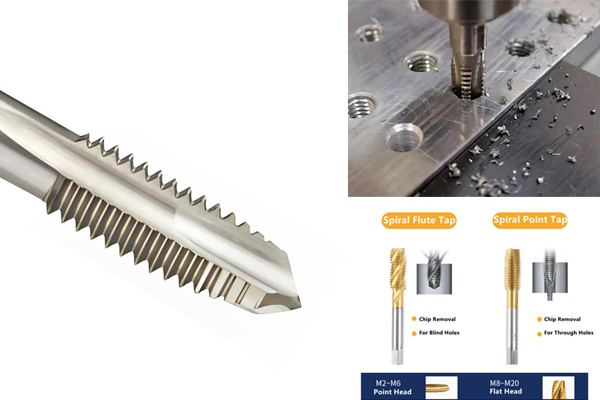
What Are Precision Taps?
Precision taps are thread-cutting tools manufactured to tight dimensional and geometric tolerances. Compared with general-purpose taps, precision taps are designed to provide more consistent thread geometry, better concentricity, controlled cutting performance, and reliable tool life.
They are widely used in:
- CNC machining centers
- Automated production lines
- Automotive manufacturing
- Aerospace components
- Precision machinery
- Mold and die manufacturing
- Electronics and industrial equipment
The manufacturing accuracy of the tap directly influences the consistency of the finished internal thread.
Why Accurate Threads Matter
High-quality threads are essential for reliable mechanical connections. Poor thread accuracy can cause loose or excessively tight assembly, increased torque, premature wear, and component failure.
Precision taps help manufacturers achieve more consistent thread dimensions and reduce variation during production.
Key Benefits of Precision Taps
- Higher dimensional accuracy: Precise manufacturing helps produce consistent thread profiles.
- Better production efficiency: Stable cutting performance reduces interruptions.
- Longer tool life: Appropriate materials and heat treatment improve wear resistance.
- Better thread surface quality: Optimized cutting geometry produces cleaner threads.
- Reduced risk of tap breakage: Proper flute and cutting-edge design improves machining stability.
What Makes a Tap Precise?
Several factors determine the precision and performance of a thread tap.
1. High-Precision Grinding
Precision grinding is critical for producing accurate tap geometry.
Important characteristics include:
- Accurate thread profile
- Consistent pitch
- Precise flute geometry
- Good concentricity
- Consistent cutting-edge dimensions
- Controlled surface finish
Modern CNC grinding technology allows manufacturers to maintain tight tolerances across large production batches.
2. High-Quality Tool Materials
The tap material has a major influence on accuracy, durability, and cutting performance.
| Material | Typical Application |
|---|---|
| HSS | General machining |
| HSS-Co | Stainless steel and alloy steel |
| PM-HSS | High-performance CNC production |
HSS provides a good balance of toughness and cost. Cobalt HSS offers improved heat resistance and wear resistance, while PM-HSS can provide excellent edge stability and durability in demanding applications.
3. Heat Treatment
Proper heat treatment provides the required balance between hardness and toughness.
A tap that is too hard may become brittle and prone to chipping, while insufficient hardness can result in excessive wear.
Controlled heat treatment helps achieve stable cutting performance and longer service life.
4. Precision Inspection
Precision taps require strict quality control during manufacturing.
Typical inspection areas include:
- Thread profile
- Pitch
- Major diameter
- Minor diameter
- Concentricity
- Flute geometry
- Cutting-edge condition
- Overall dimensions
Consistent inspection helps ensure that finished taps meet the required standards.
Types of Precision Taps
Different machining conditions require different tap designs.
Straight Flute Taps
Straight flute taps are versatile tools suitable for many general-purpose applications.
They are commonly used for:
- Carbon steel
- Cast iron
- General machining
- Short holes
Their relatively simple geometry provides good strength and versatility.
Spiral Flute Taps
Spiral flute taps have helical flutes that help pull chips out of blind holes.
They are particularly suitable for:
- Blind holes
- Stainless steel
- Alloy steel
- Aluminum
- Materials that generate continuous chips
Good chip evacuation helps reduce the risk of chip accumulation and tap breakage.
Spiral Point Taps
Spiral point taps, also known as gun taps, are primarily designed for through holes.
Their geometry pushes chips forward and away from the cutting area.
They are commonly used for:
- Through holes
- Steel components
- High-volume production
- CNC machining
Forming Taps
Forming taps create threads by displacing material rather than cutting it away.
Advantages include:
- No cutting chips
- Strong thread profiles
- Good surface finish
- Potentially long tool life
They are generally suitable for ductile materials such as aluminum and certain steels.
Selecting the Right Precision Tap
Choosing a precision tap requires consideration of the complete machining application.
Workpiece Material
First determine the material being machined:
- Carbon steel
- Alloy steel
- Stainless steel
- Aluminum
- Copper alloys
- Cast iron
- Other difficult-to-machine materials
Different materials require different cutting geometries and tool materials.
Hole Type
For through holes, spiral point taps are often a suitable choice because they push chips forward.
For blind holes, spiral flute taps are generally preferred because they help remove chips from the hole.
Straight flute taps can be used where chip evacuation is less demanding.
Thread Specification
Always confirm:
- Thread diameter
- Pitch
- Thread tolerance
- Thread standard
- Required thread depth
Common standards include ISO, DIN, JIS, and ANSI.
Production Requirements
For low-volume machining, standard HSS taps may provide an economical solution.
For high-volume CNC production, HSS-Co, PM-HSS, or coated taps may provide better wear resistance and reduce tool changes.
The Role of Tap Coatings
Coatings can improve wear resistance, reduce friction, and increase tool life.
TiN
Titanium Nitride is commonly used for general-purpose applications.
Benefits include:
- Good wear resistance
- Reduced friction
- Improved tool durability
TiCN
TiCN provides higher hardness and wear resistance and can be suitable for demanding machining applications.
TiAlN
TiAlN provides good high-temperature resistance and can be useful for applications involving higher cutting temperatures.
The appropriate coating depends on the workpiece material, cutting speed, lubrication, and machining environment.
Common Threading Problems
Even a high-quality precision tap can produce poor results when machining conditions are incorrect.
Tap Breakage
Common causes include:
- Incorrect tap selection
- Improper hole diameter
- Poor chip evacuation
- Excessive tapping torque
- Insufficient lubrication
- Incorrect cutting parameters
Poor Thread Accuracy
Possible causes include:
- Worn tap
- Incorrect tap tolerance
- Machine misalignment
- Incorrect pre-drilled hole diameter
- Excessive tool deflection
Short Tool Life
Tool life can be reduced by:
- Excessive cutting speed
- Incorrect tap material
- Excessive cutting temperature
- Poor lubrication
- Difficult workpiece materials
Best Practices for Precision Thread Manufacturing
To achieve consistent thread quality:
- Use the correct pre-drilled hole diameter.
- Select the appropriate tap geometry for the hole type.
- Match the tap material to the workpiece.
- Use suitable cutting parameters.
- Apply appropriate coolant or lubrication.
- Monitor tap wear during production.
- Inspect finished threads regularly.
- Replace worn or damaged taps before thread quality deteriorates.
Why Choose Chuanhao Precision Taps?
Sichuan Chuanhao Seiko Mechanical Co., Ltd. specializes in the development and manufacturing of precision thread tools.
The company focuses on:
- More than 20 years of thread tool manufacturing experience
- Precision grinding technology
- HSS and powder metallurgy materials
- JIS, ISO, and DIN standards
- Strict manufacturing and inspection processes
- Solutions for difficult-to-machine materials
Chuanhao precision taps are designed for applications where consistent thread quality, tool durability, and machining efficiency are important.
Conclusion
Accurate threads begin with the right precision tap.
By carefully selecting the tap geometry, material, coating, and machining parameters, manufacturers can improve thread accuracy, extend tool life, reduce tap breakage, and increase production efficiency.
Whether machining stainless steel, aluminum, carbon steel, or alloy materials, choosing a precision tap that matches the specific application is essential for achieving reliable and repeatable results.


