
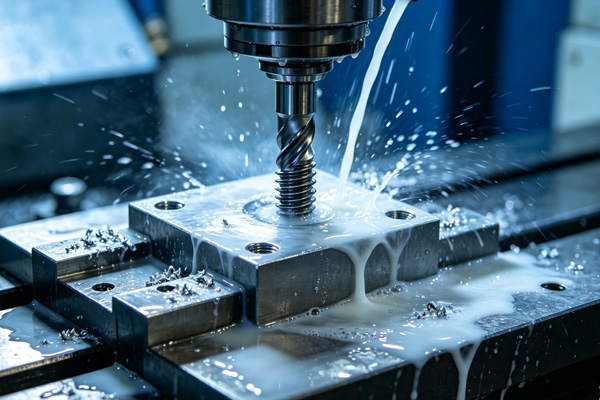
In modern manufacturing, internal threading is one of the most common machining operations. Choosing the correct machine tap directly affects thread quality, production efficiency, tool life, and machining cost.
Unlike hand taps, machine taps are designed for automatic machining processes such as CNC machining centers, drilling machines, and tapping machines. With different designs available for various materials and applications, selecting the right tap requires understanding tap types, materials, coatings, and working conditions.
This guide explains everything you need to know about choosing the right machine tap.
1. What Is a Machine Tap?
A machine tap is a cutting tool used to produce internal threads in pre-drilled holes. It is mainly used with machine tools for high-speed and continuous production.
Compared with hand taps, machine taps feature:
- Higher cutting efficiency
- Better dimensional accuracy
- Longer tool life
- Improved chip control
- Compatibility with CNC equipment
Machine taps are widely used in industries such as:
- Automotive manufacturing
- Aerospace
- Mold making
- Electronics
- General machining
- Precision engineering
2. Main Types of Machine Taps
Different tap geometries are designed for different materials and hole conditions.
2.1 Straight Flute Machine Taps
Straight flute taps are the most common type of machine taps.
Features:
- Straight chip grooves
- Suitable for general applications
- Easy to manufacture and maintain
- Good versatility
Applications:
Recommended for:
- Short blind holes
- Low-carbon steel
- Cast iron
- Aluminum alloys
However, chip removal is limited compared with spiral designs.
2.2 Spiral Flute Taps
Spiral flute taps have helical grooves that pull chips backward out of blind holes.
Advantages:
- Excellent chip evacuation
- Reduces chip packing
- Suitable for deep blind holes
- Produces cleaner threads
Recommended Materials:
- Stainless steel
- Alloy steel
- Aluminum
- Copper alloys
For CNC machining of difficult materials, spiral flute taps are often the preferred choice.
2.3 Spiral Point Taps (Gun Taps)
Spiral point taps push chips forward during cutting.
Advantages:
- High-speed tapping
- Excellent for through holes
- Strong cutting ability
- Reduced cutting resistance
Best Applications:
- Through holes
- Steel components
- Production machining
They are commonly used in automotive and mass-production applications.
3. How to Choose the Right Machine Tap?
Selecting a machine tap requires considering several factors.
3.1 Material Being Machined
The workpiece material is the most important factor.
| Material | Recommended Tap Type |
|---|---|
| Carbon Steel | Spiral Point Tap |
| Stainless Steel | Spiral Flute Tap |
| Aluminum | Aluminum Special Tap |
| Cast Iron | Straight Flute Tap |
| Hardened Steel | Special Coated Tap |
Different materials create different cutting forces and chip characteristics.
3.2 Hole Type: Through Hole or Blind Hole
Through Hole
Choose:
- Spiral point taps
Reason:
The tap pushes chips forward and prevents chip accumulation.
Blind Hole
Choose:
- Spiral flute taps
Reason:
The spiral groove pulls chips out of the hole.
3.3 Tap Material Selection
Common machine tap materials include:
High-Speed Steel (HSS)
Advantages:
- Good toughness
- Cost-effective
- Suitable for general machining
Applications:
- Mild steel
- Low-volume production
Cobalt High-Speed Steel (HSS-Co)
Advantages:
- Higher hardness
- Better heat resistance
- Longer service life
Applications:
- Stainless steel
- Alloy steel
- Difficult-to-machine materials
Powder Metallurgy High-Speed Steel (PM-HSS)
Advantages:
- Excellent wear resistance
- Higher cutting performance
- Improved edge strength
Applications:
- High-speed CNC machining
- High-production environments
4. Tap Coatings and Their Benefits
Surface coatings improve tool performance.
TiN Coating (Titanium Nitride)
Benefits:
- Reduces friction
- Improves wear resistance
- Extends tool life
Suitable for:
- General steel machining
TiCN / TiAlN Coating
Benefits:
- Higher temperature resistance
- Better performance at high cutting speeds
Suitable for:
- Alloy steel
- Stainless steel
- High-performance machining
5. Common Machine Tap Standards
Machine taps are manufactured according to international standards:
- DIN standards (Germany)
- ISO standards
- JIS standards (Japan)
- ANSI standards (USA)
Common examples:
- DIN 371 machine taps
- DIN 376 machine taps
- ISO metric taps
- JIS metric taps
Selecting the correct standard ensures compatibility with existing machining systems.
6. Common Problems Caused by Wrong Tap Selection
Using an unsuitable tap may cause:
Tap Breakage
Causes:
- Wrong flute design
- Excessive cutting force
- Poor chip evacuation
Poor Thread Quality
Causes:
- Incorrect tap geometry
- Incorrect cutting speed
- Tool wear
Short Tool Life
Causes:
- Wrong coating
- Incorrect material selection
- Insufficient lubrication
7. Machine Tap Selection Checklist
Before choosing a machine tap, confirm:
✓ Workpiece material
✓ Thread specification
✓ Hole type (blind or through hole)
✓ CNC machine capability
✓ Cutting speed
✓ Coolant condition
✓ Required production volume
✓ Tap material and coating
8. Why Choose Chuanhao Machine Taps?
Sichuan Chuanhao Seiko Mechanical Co., Ltd. specializes in the research, development, and manufacturing of precision thread tools.
Chuanhao machine taps feature:
- More than 20 years of thread tool manufacturing experience
- Advanced CNC grinding technology
- High-quality HSS and powder metallurgy materials
- JIS, ISO, and DIN standard production
- Strict precision inspection processes
Our machine taps are designed for demanding applications including stainless steel, alloy steel, aluminum, and other difficult-to-machine materials.
Conclusion
Choosing the right machine tap is essential for achieving accurate threads, improving machining efficiency, and reducing production costs.
The correct selection depends on:
- Workpiece material
- Hole type
- Tap geometry
- Tool material
- Coating
- Machining conditions
By understanding these factors, manufacturers can select the ideal machine tap for their CNC machining applications.


